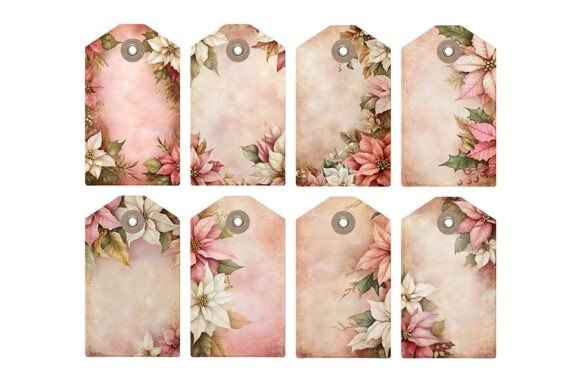
Pink Poinsettia Tags
As a designer who’s spent years working with embroidery files, I always start by asking: does this design feel right for real-world use? Pink Poinsettia Tags are an intriguing set of high-resolution illustrations that promise versatility. But how do they hold up when stitched onto fabric, and what kind of projects do they really belong in?
First Impressions: A Grungy Floral Vibe
The first thing I notice about Pink Poinsettia Tags is the mood. These aren’t your typical clean, minimalist designs. The grungy aesthetic adds a layer of texture and character that feels more handmade than mass-produced. The poinsettia shapes are bold, with intricate details that suggest a mix of satin stitch and fill stitch work. The layout is organized, making it easy to see how each tag could be used individually or as part of a larger collection.
These tags have a visual personality that leans toward vintage, rustic, or even slightly edgy. They’d fit well in a holiday-themed project, but also in a more general craft or home decor setting. The 11 x 8.5-inch size is perfect for printing at home, which makes them ideal for mockups, digital previews, or even as a base for sublimation projects.
Real-World Embroidery Use Cases
When I think about where Pink Poinsettia Tags would shine, I imagine them on custom apparel, tote bags, or baby items. Their size and detail level make them suitable for embroidered patches, which can then be sewn onto jackets, backpacks, or even aprons. They’d also work well as decorative accents on pillow covers or tea towels, especially for holiday or seasonal themes.
For small business owners and Etsy sellers, these tags could serve as a unique selling point. A hand-stitched tote bag with a Pink Poinsettia Tag as a focal point might stand out in a crowded market. Similarly, a personalized gift like a baby blanket or a holiday ornament could benefit from the design’s visual appeal and textural depth.
Where to Be Cautious
That said, there are some limitations. The design’s complexity may not work well on small hoop sizes. If you’re trying to stitch this onto a cap or a curved surface, the detailed corners might get distorted. Thin or stretchy fabrics could also pose challenges, especially if the stitch density is too high. In such cases, a stabilizer becomes essential to prevent puckering or distortion.
Another consideration is fabric color. While the design is likely intended for light backgrounds, it might not show up as clearly on dark fabrics. I’d recommend testing it on different materials before committing to a commercial project. Also, if you’re planning to use this for commercial embroidery, check the licensing terms to ensure you’re allowed to sell finished products or digital files.
Impact on Visual Appeal and Customer Perception
When it comes to visual appeal, Pink Poinsettia Tags offer a strong presence. The grungy floral elements add depth and interest, which can elevate the perceived value of a handmade product. Customers often associate intricate designs with quality and effort, which can translate into higher customer trust and satisfaction.
For a craft business, this design could help create a cohesive brand identity. Whether it’s used on a holiday gift, a boutique product, or an Etsy listing, the consistent style can reinforce your brand’s aesthetic. Plus, the ability to print and use these tags as mockups gives you a clear idea of how the final product will look before stitching.
Practical Designer Notes
Before using any embroidery file, I always recommend testing it on scrap fabric. This helps you understand how the stitches will look on your chosen material. For Pink Poinsettia Tags, pay close attention to the thread color contrast—especially if you’re using a dark fabric. A lighter thread might not show up as well as expected.
Review the stitch density to make sure it’s appropriate for your project. If the design is too dense, it might cause fabric puckering or wear over time. Confirm the hoop size needed for the design, and make sure your machine can handle it. Also, inspect the small details—like corners or tiny lettering—to ensure they’ll hold up during stitching.
Lastly, don’t forget to test the design in black and white mockups. Sometimes, a design that looks good in color might not translate well in monochrome, especially if the contrast is low. Comparing it against both light and dark backgrounds can help you decide the best way to use it.
Final Thoughts: A Versatile Design with Clear Potential
Pink Poinsettia Tags are a solid choice for designers looking for a grungy floral element that can be used across multiple mediums. Whether you’re creating custom apparel, personalized gifts, or small shop merchandise, these tags offer a level of detail and style that can enhance your work.
With careful consideration of fabric type, hoop size, and stitch density, they can become a valuable addition to your embroidery project library. Just remember to test, adjust, and ensure the design aligns with your brand and customer expectations before finalizing any product.
For anyone looking to add a touch of rustic elegance to their handmade or commercial work, Pink Poinsettia Tags are worth exploring—but always with a critical eye and a practical approach.